If we have a clear sky on the night of Thursday 12th of August then conditions will be excellent for observing the Perseid Meteor Shower. The best time to observe the Perseid Meteor Shower will be from midnight onwards to the early hours of the 13th but you should still be able to see meteors before midnight. Below are two diagrams showing from where the meteors originate, one at midnight and one at 04:00 on the 13th.
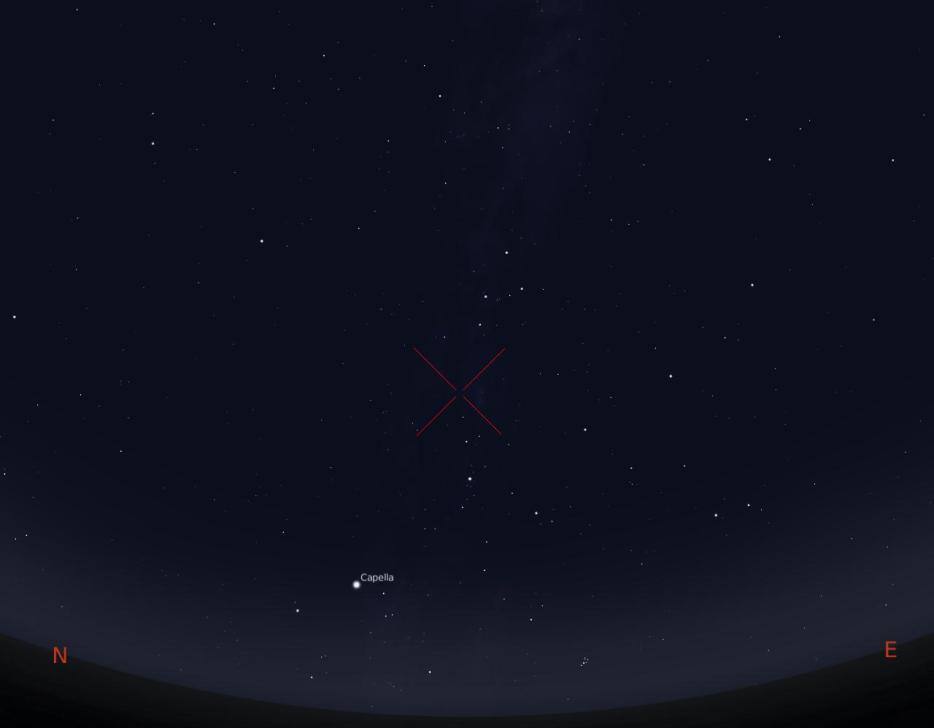
The picture above shows the sky at 23:59 on the 12th of August looking North East. The red lines show the area of sky from which the meteors originate. This is called the radiant. At this time we would hope to be seeing upwards of 25 meteors and hour which means that just looking to the sky for 5 minutes, you should see at least two meteors.
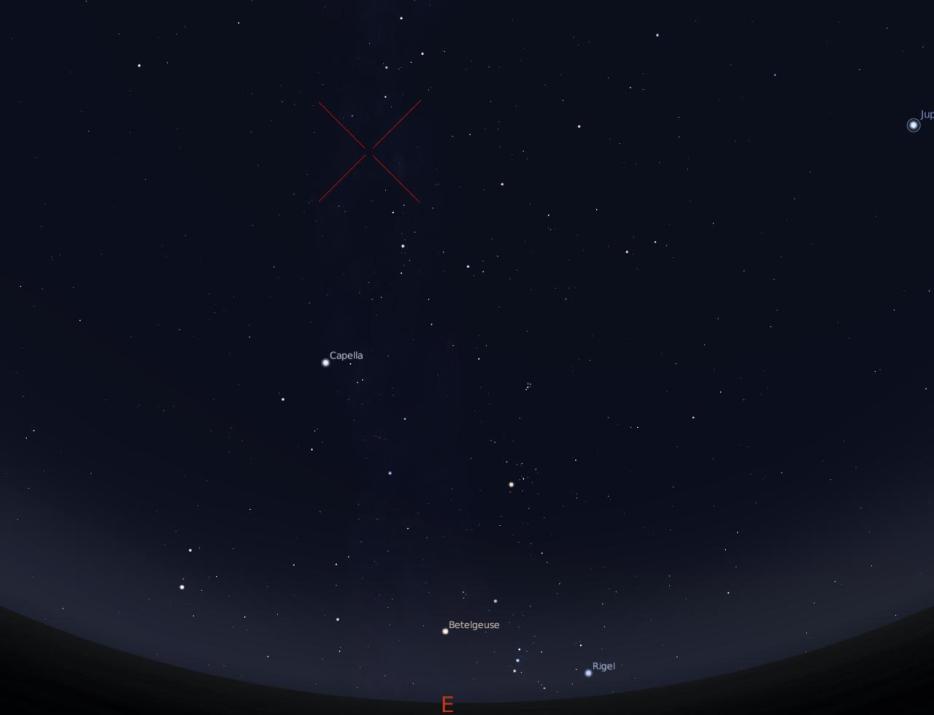
The picture above shows the sky at 04:00 on the 13th of August looking East. As you can see the radiant has climbed high in the sky. This is the best time to observe the shower. By now we should be seeing upwards of 100 meteors an hour so you would expect to see at least 1 or 2 meteors every minute. This is obvioulsy an average. It is possible that for a few minutes there will be no meteors at all and then within a space of a few seconds you see 4 or 5 at once.
As long as conditions permit I will be trying to capture some meteors on camera. If I am successful then I will add the images to this page.
Even if it is cloudy on the night of the 12th and 13th, it should still be possible to see up to 25 meteors an hour on the following night. Here's wishing for Clear Skies :-)
Unfortunately, viewing conditions from my location were lousy. As the time of maximum approached, the sky clouded over, only clearing as the sun came up. Because of this I only captured a few meteors on camera.
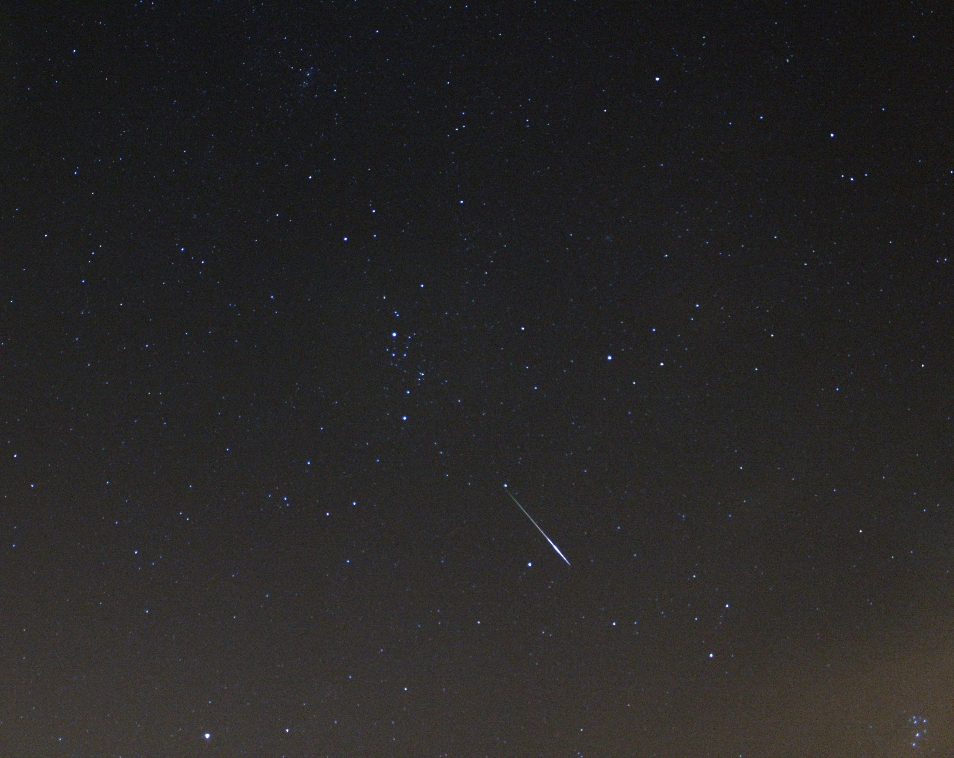
The picture above was taken on the morning before the maximum. You can see that the Pleiades are just rising in the bottom right hand corner.
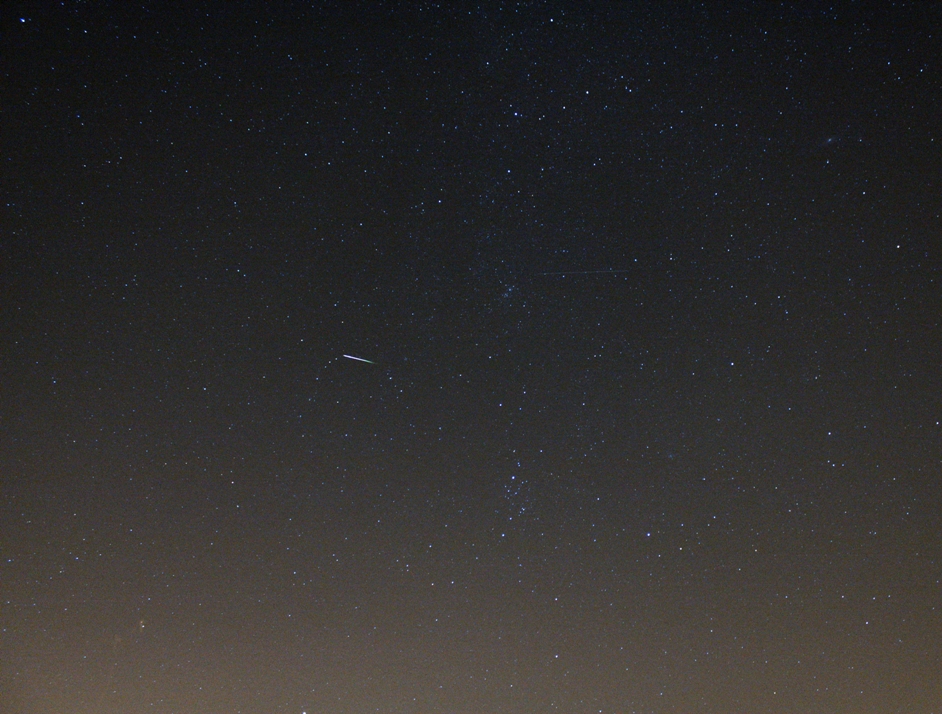
The picture above was taken at 00:30 on the 13th. Apart from the meteor just left of centre you can see the track of a satellite above and to the right of the meteor. In the bottom left of the picture you can just make out the wispy smoke trail left behind by a very bright meteor that unfortunately shot across the sky between photographs.
Both these pictures are single exposures of 15 seconds with an ISO setting of 1600.